
October 25, 2026

Strategy games are one of the easiest ways to get kids planning ahead, keeping track of clues and changing tactics when a plan fails, and they work as well at a homeschool table as on family game night. Here are eight games for ages 8 and up (one is graded 7+ and one 10+), grouped by the kind of thinking they ask for, with prices, player counts, verified awards and an honest con for each. First, a word on what the research does and doesn't show.
What the research says. A 2026 systematic review and meta-analysis of board games and executive functions (24 studies in the review, 16 in the meta-analysis) called the findings "promising," but concluded that the evidence "is not yet sufficient to support a strong recommendation" for using board games to improve executive functions, and asked for better randomized trials. A 2023 randomized trial in rural schools assigned 99 children to 12 board-game sessions over six weeks or regular classes; the game group got faster on a cognitive-flexibility task. That study was supported by a board-game publisher, which supplied the games. And chess, the most-studied "brain game," did not improve third and fourth graders' math problem-solving more than checkers or no extra activity in two experiments with 233 children. The fair takeaway: pick these because they're fun ways to practice reasoning together, not because they'll raise grades.
DEDUCTION AND HIDDEN INFORMATION
1. Spy Alley (Spy Alley Partners)
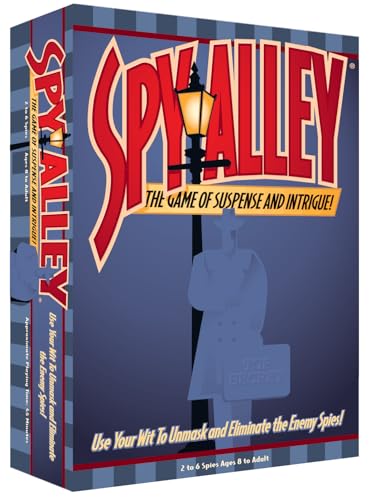
Each player secretly takes on a spy identity and tries to unmask the other players' identities while keeping their own hidden. Spy Alley Partners lists it for 2 to 6 players, ages 8 to adult, with games of 30 to 40 minutes. American Mensa's Mind Games lists Spy Alley as a 1998 Mensa Select winner.
Price: $39.99 on Amazon on Oct. 25.
Pros: Bluffing and deduction in one game; plays up to 6, so it works for bigger families; Mensa Select (1998).
Cons: Players roll a die to move, so luck matters; at $39.99 it's tied for the priciest game here, more than double the cost of Clue below.
2. Clue (Hasbro Gaming, reimagined edition)
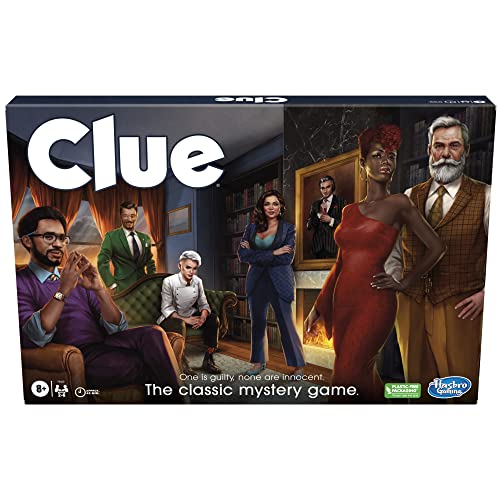
The classic who-done-it in Hasbro's reimagined edition: players gather clues to work out who killed Boddy Black, where in the Tudor Mansion and with which weapon, by ruling possibilities out. This version adds Clue cards that force opponents to reveal information. For 2 to 6 players, ages 8 and up.
Price: $14.00 on Amazon on Oct. 25.
Pros: The cheapest game on this list; process-of-elimination reasoning kids can see on their notepad.
Cons: Dice movement adds luck; this reimagined edition renames some characters (Mayor Green, Chef White), which may confuse grandparents who know the original.
3. Stratego Original (Jumbo)
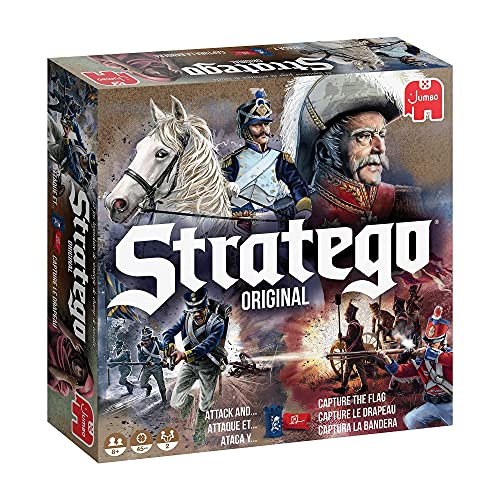
Two players hide the ranks of their 40 pieces behind a screen and try to capture the other side's flag, so memory and bluffing matter as much as attack. For 2 players, ages 8 and up.
Price: $28.99 on Amazon on Oct. 25.
Pros: No dice: every outcome comes from your own choices; a classic parent-and-child duel.
Cons: Two players only; setting up 40 pieces each takes a while before the first move.
SPATIAL LOGIC AND CODE-BREAKING
4. Blokus (Mattel Games)

Players take turns placing their 21 pieces so each one touches another of the same color only at the corners, claiming territory and blocking opponents; whoever has the fewest squares left wins. It has 84 pieces, patterns on the pieces for color-blind players, and is for 2 to 4 players, ages 7 and up. Mensa lists Blokus as a 2003 Mensa Select winner (under an earlier publisher).
Price: $17.46 on Amazon on Oct. 25.
Pros: One rule and no luck; under $20; color-blind-friendly pieces.
Cons: Strictly 2 to 4 players; with no hidden information or bluffing, it practices a narrower set of skills than the deduction games above.
5. Quoridor (Gigamic)

Race your pawn to the far side of a wooden board while placing fences to block your opponent's path, and decide each turn whether to move or defend. The listing says one minute to learn and 15 minutes to play, for 2 to 4 players ages 8 and up. Mensa lists Quoridor as a 1997 Mensa Select winner.
Price: $37.99 on Amazon on Oct. 25.
Pros: Solid wood pieces; no luck at all; quick rounds suit a lesson break.
Cons: Close to $40 for a 15-minute game; abstract with no theme, which some kids find dry.
6. The Original Mastermind (Pressman)

One player sets a hidden color code and the other works it out from feedback after each guess. The listing says there are more than 2,000 possible combinations. For 2 players, ages 8 and up.
Price: $26.77 on Amazon on Oct. 25.
Pros: Pure logic with no luck; easy to explain; good for a parent-versus-child duel.
Cons: Two players only; small pegs are easy to lose and not for homes with toddlers.
PLANNING AHEAD
7. Azul (Plan B Games)
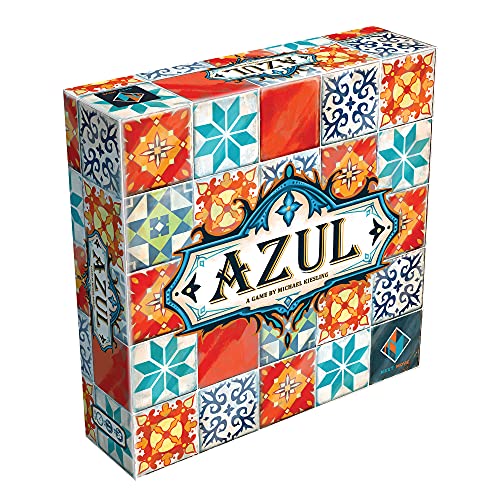
Players draft colored tiles from shared factory displays to complete pattern rows and build a mosaic wall, deciding not just what they need but what to leave for others. For 2 to 4 players, ages 8 and up, 30 to 45 minutes. Azul won the 2018 Spiel des Jahres, Germany's game-of-the-year award, and Mensa lists it as a 2018 Mensa Select winner.
Price: $31.99 on Amazon on Oct. 25.
Pros: Two verified awards; short rules and chunky tiles; plays well with two.
Cons: Scoring takes some adding, so younger 8-year-olds may need help with it; tiles are small parts.
8. CATAN, 6th Edition (CATAN)

Gather brick, wood, wheat, ore and sheep, trade with other players and build roads, settlements and cities to reach 10 victory points on a modular board. For 3 to 4 players, ages 10 and up, 60 to 90 minutes; a 5-6 player extension is sold separately.
Price: $39.99 on Amazon on Oct. 25.
Pros: Deep, replayable family strategy with lots of negotiation; the board changes every game.
Cons: Graded 10 and up, so it's the older-sibling pick; dice decide resources; doesn't play with two; the longest game here.
Quick picks: Under $20: Clue, Blokus. Two-player duels: Stratego, Mastermind, Quoridor. Biggest groups: Spy Alley and Clue (up to 6). For more, see our Award-Winning Games of 2026.
Editor's note: Products are chosen by TDmonthly editors on their merits. No company paid for inclusion.
For the full weekly market brief: The ToyDirectory Intelligence Report
Sources:
#ad As an Amazon Associate, TDmonthly earns from qualifying purchases. Prices and availability are as of Oct. 25, 2026 and may change.
Copyright © 2026 TDmonthly®, a division of TOYDIRECTORY.com®,
Inc.