Nobody needs a toy to live, but you need to sell as many as possible to keep up your livelihood. How can you persuade your customers that they need the toys you sell, convince them to pay a profitable price, and then get them to return again and again?
Transforming shoppers from gullible consumers into passionate assessors of quality and value will make them appreciate the distinctiveness of your products. And if you create a pleasurable sensory experience in your store, form an alliance with your neighbors and price things correctly, stray customers will become the loyal clients you need to keep your business thriving.
PRICE FOR THE CUSTOMER
Even in these days of economic woes, lower prices are not what customers expect or want in a specialty toy store.
"People are willing to pay for quality and specialized help," assured Dr. Marlene Jensen, CEO of Pricing Strategy Associates. "I've done research where we asked people to choose the discount they wanted on a number of products — anywhere from 0 percent to 80 percent. Only 6 percent of all respondents wanted the biggest discount on all products. People were least likely to want big discounts on products which carried physical risks, especially tires." i
Scandals over high levels of lead in toys made in China in 2007 have caused shoppers to have a similar attitude toward the toys they buy, she continued.
"Dr. Drozdenko and I just completed research on consumer willingness to pay higher prices for products not made in China or India," said Jensen. "We found U.S. consumers willing to pay 61 percent more for a U.S.-made toy than one from China." They presented their evidence at the Behavioral Pricing Conference at Drexel University in September 2008.
Phil Wrzesinski, owner of Toy House and Baby Too in Jackson, Mich., a family business that's been thriving since 1949, first started rethinking his pricing techniques when he and a sales rep paid a visit to a new big-box baby store that opened near his business around 2000.
Perceived Bargains
Fig. 6.1 Shoppers buy perceived bargains.
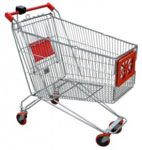 |
Phil noticed a poster-board-sized sign reading simply "$4.57" above a wire bin of mesh bathtub toy bags from Safety First. He and the rep laughed at the simplicity of the sign, which didn't advertise "bargain," "sale" or anything else. Just the price.
But as they stood by the bin, three shoppers came by, glanced at the sign, then immediately reached into the bin, pulled out a toy bag and dropped it in their carts (Fig. 6.1). Phil suddenly realized that the bags had a wholesale price of only $2 and that he sold them for $3.99 in his own store but, thanks to the sign, customers perceived the $4.57 price as a bargain!
Lower Prices Without Lowering Prices
Fig. 6.2 Saving customers a penny earns retailers cash.
 |
Perception has fascinated retailers for at least 100 years, when it was realized that customers perceive prices ending in .99 to be significantly lower than a price just one cent higher (Fig.6.2). In 2005, Manoj Thomas and Vicki Morwitz conducted five experiments to determine why.
"First, this occurs only when the leftmost digits of the prices differ (e.g., $2.99 vs. $3.00)," they explained in the abstract of their study, "Penny Wise and Pound Foolish: The Left-Digit Effect in Price Cognition," which was published in the June 2005 edition of the Journal of Consumer Research. "Second, the left-digit effect also depends on the numerical and psychological distances between the target price and a competing product's price. The closer the two prices being compared, the more likely is the left-digit effect."
Though the .99 rule is well known, Wrzesinski's experience at the big-box store got him rethinking all of his pricing policies.
"I realized we can't look at pricing from our point of view; we have to look at it from the customer's point of view," he told TDmonthly . "From the customer's point of view, certain items didn't sell well at certain prices."
Customers Think With Bills
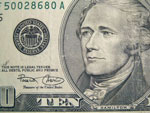
Fig. 6.3 Shoppers think in terms of $5, $10 and $20 bills.
 |
Customers buying a gift in Wrzesinski's store often wanted to add on a "$5 rattle" to spruce up the package's wrapping, he realized.
"They'd always say a '$5 rattle,' not $3 or $4." And a $5 rattle meant one priced $4.99 or less; $5.99 was too expensive, because it required more than just a $5 bill. (Fig. 6.3)
"If they didn't find anything they liked for $5, they'd immediately jump to the idea of a $10 rattle," he said. "The reason they'd make that jump is because they think of the bill they pull out of their wallet. Although $5.99 is too much when they're thinking about spending $5.00, when they jump to the idea of a $10 bill, $5.99 looks too cheap and $7.99 looks better."
$2 More Is a Bargain
As an experiment, Wrzesinski took two boxes of Gund wrist rattles that had been priced at $5.99 and changed the price tag on one box to $7.99 and set them together side by side.
"We sold out of $7.99 rattles, but we didn't sell one piece of the $5.99 rattles — all because of customer perception," he said. The key to pricing, he advised, is to find the price that looks best to the customer.
Good Numbers, Bad Numbers
As Wrzesinski continued his experiments, he noticed that items with a "3" or "6" in them were not good sellers, attributing this to their association with "unlucky" numbers such as 13 and 666. Zero was also a "bad" number, because if something is $90.99, it's perceived to be less of a bargain than the same item priced at $99.99. Conversely, the numbers 4 and 9 are perceived as "good," except in Asian markets, where 4 is considered unlucky.
A Jump in the Profit Margin
| "If the customer sees more value because the price looks better to them, the customer's happy, you're happy and the company's happy because you're selling more of [its] goods." — - Phil Wrzesinski, Toy House and Baby Too |
Since Wrzesinski instituted his price changes, he's noticed a nearly seven-point increase in his profit margin. At this point, he said, approximately 75 percent of the product in his 30,000-sq.-ft. store has been priced for the customer's point of view. However, he warned that certain commodities, such as Ganz's Webkinz, won't adhere to these guidelines, because customers are so familiar with their prices.
Fig. 6.4 Even sales of Playmobil benefit from strategic pricing.
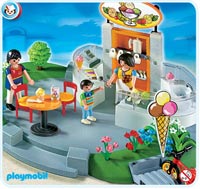 |
"Someone suggested we couldn't do it to Playmobil, since it's a commodity, but we did do it to Playmobil; we saw a 21 percent increase in sales and a 27 percent increase in profit (Fig. 6.4)," he said. No matter how high the price, "If the customer sees more value because the price looks better ... the customer's happy, you're happy and the company's happy because you're selling more of [its] goods."
TEACH THEM WHAT YOU KNOW
| "[Seven-year-old Paige] is fabulous to take shopping for other children because she evaluates what and why they would like something." — Grandmother Ruth Mandt |
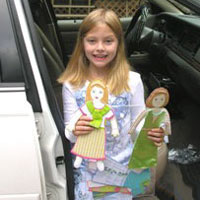
When TDmonthly editor Susan Ledford asked Roundtable reviewers if the experience of being toy testers had changed them, Ruth Mandt reported that her grandchildren had increased in self-confidence, "since someone cares what they think." Her granddaughter Paige (7) "is fabulous to take shopping for other children because she evaluates what and why they would like something." (Fig. 6.5)
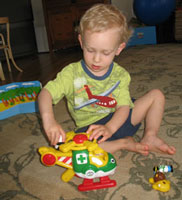
Rebecca Heinrich said of son Collin (3), "I think it has sharpened his sense of value, both in budget and play value." (Fig. 6.6)
Robbin Dawson said her son Ethan (9) learned that "his opinion has value and that being 'paid' does not necessarily involve money."
Fig. 6.5 Paige with Pockets of Learning doll
 |
|
Fig. 6.6 Collin plays with WOW
 |
|
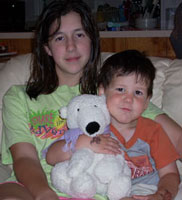
Fig. 6.7 Victoria and brother with Warm Whiskers bear
 |
|
Bust the Hype
You can use your newsletter, blog and press releases to inform parents about how to help their children spot — and resist — the hype of heavily advertised mass-market toys and games. (Sidebar 6.1 Turn Mass-Market Fanatics into Specialty Lovers)
"Younger kids do tend to fall for the promises made on the box and in the commercials," said Victoria Ledford (13). (Fig. 6.7)
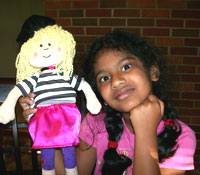
The impact of packaging and advertising, especially TV commercials, is enormous on children, said Dr. Adele Schwartz, research director for Stars for Kidz, a market research company. "Parents need to be really cautious and make purchases wisely, and they need to find a way to make children more conscious. We don't invest enough in teaching children how to be wise consumers," she said. (Fig.6.8)
"Aggressive marketing is a factor," explained Dawson of her children's requests for specific toys. Kathleen Tutone, owner of Treehouse Toys in Portsmouth, N.H., stated, "[Children] are bombarded with hype from television."
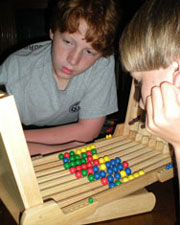
Sue Christensen, another toy tester, commented, "I talk to [my kids] about how advertising can make a toy look a lot cooler than it really is." (Fig. 6.9)
Fig. 6.8 Rose and Language Littles
 |
|
Fig. 6.9 Christensens strategize with Uncle Skunkle
 |
|
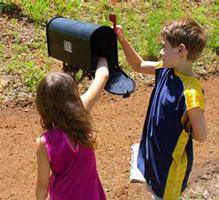
Fig. 6.10 Dawson kids mail Pop-Up cards
 |
|
Dawson asks her children questions: "What is it made of (eco-friendly)? How well-made the toy is (durability)? How many ways you can play with the toy (versatility)?" She has found that "with toys that only have one use or one or two features, they'll have buyer's regret later." (Fig.6.10)
Sponsor Toy Testing
Instead of holding a standard event in your store, turn the day into a toy testing event with children grading toys and games with stars or even writing their own reviews. Posting their comments in your store and in your newsletters and press releases will let them (and their parents) know that their opinions are important. (Sidebar 6.2 What It's Like to Be a Toy Tester)
Actively listen to a child, suggested Tutone. "Communication is a two-way street, and you have to really listen to what their needs and wants are."
Jill Zuidema suggested having children do a comparison between several toys. The comments they make as they compare and contrast could be useful to you on your next round of ordering, too.
Ethan (9) and Sara (7) "have learned how to articulate their likes and dislikes more clearly," noted Dawson. They are also more liable to change a game's rules or a toy's intended use than prior to their Roundtable participation. "I suspect that talking so often about how test toys might be improved is the culprit," she said.
Victor (4) and Radina (11) strengthened their creativity as they came up with suggestions to improve games and toys and began "thinking beyond the game," pointed out their mom, Kostadinka Lilova.
"I'm still surprised when [children] generate such high-quality ideas and express what is capturing their attention," Dr. Schwartz commented. "Companies have learned to take more lead from kids and to listen to them very carefully."
Get Involved With Parents
You or one of your staff can make regular trips to local parents' groups and schools to spark discussions about toys, or even bring samples of products for them to evaluate.
"I have given more thought to my own purchases," commented Heinrich about her experience as a toy tester. Mandt is more likely "to consider the way the child will interact with the toy more" as a result of her experience. Lilova agreed: "We actually have started paying more attention to the specific toy the kids were playing with [and] why she/he plays with this toy." She concluded, "It is important for the parents to be part of the kids' imaginations by discussing their toys and games."
Ecologically minded Dawson looks more closely at what materials are used to manufacture products. "Toy testing has firmly established the habit," she stated. Teresa Wilson now routinely consults a website, if available, before purchases. She also more consistently looks at a toy's intended age range and number of players.
Retailer Collette Shockley pays more attention to others' opinions since she began reviewing toys for TDmonthly. "Economically, price makes a difference in purchases, but children really enjoy the quality dolls more," she learned.
HOW YOU'LL BENEFIT
Understanding why they respond to one toy rather than another expands a child's awareness of his or her own needs, and increases the likelihood that the next toy chosen will have lasting value.
Packaging Gets Read
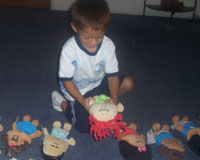
Fig. 6.11 Flamenco brother with IshaBabies
 |
Wilson now sees her children looking more closely at packaging as a result of their Roundtable participation. "They tend to look for pictures of the items and/or description of contents, which had not occurred to them previously," she pointed out. But they also learned not to "judge a toy based on packaging and/or website," and, as a result, "they do not automatically discount a toy based on suggested age of user," she said.
Though Jonathan (9) will only look at the packaging closely if his interest is initially engaged, reported Veronica Flamenco, brother Matthew (11) reads the packaging first before deciding if he is interested in the toy. (Fig. 6.11)
Virginia Davis, writer for TDmonthly's Dolls Roundtable, said of her granddaughters, "They ask their own questions about the toys they play with or want to purchase." Lilova reported that her children now pay more attention to the purpose of a game/toy.
Parents Become Involved
Analyzing toys helps parents recognize what qualities keep a child interested in a toy for the long term.
"Part of what makes a toy or game a perennial around here is easy set-up and clean-up, a good mix of luck and skill, and humor potential," commented Christensen. Wilson pointed out open-ended play and versatility of play as qualities that retained her children's interests in a specific toy.
"The toys that stay with my kids are the interactive ones — a craft set of some sort, a game we can play together," said Gail Richardson. (Sidebar 6.3 The Toys We Keep) Dawson added, "Ethan (9) is still very much into competitive play, (interaction with other children comes into play), so he enjoys board games with skill (rather than chance) involved." Zuidema commented, "Most of what we get are things that will last through several years of interest."
Wilson said, "I've found that my perception of what a toy should cost may not be contemporary with today's market."
Kids Learn
Even after toy testing, a kid might still fall for the latest fad on TV or a toy at a friend's house.
"If a toy is disappointing, the child will learn from that," said Dawson. "It's an inexpensive lesson for the children."
Thirteen-year-old Victoria agreed: "An occasional hard lesson learned is worth it in the end."
WOO YOUR CUSTOMERS
While sex appeal may seem out of place in a toy store, most paying customers and staff are adults and are at least subliminally aware of some sort of attraction. Why not use that to your advantage, suggested Steve Olson, CFO of the Persuasion Institute.
Explore Touch
| "If you're not touching someone, you're not quite trusting completely." — Steve Olson, the Persuasion Institute |
"A woman staff member touching a man on the arm and flirting goes a long way" toward making the sale, said Olson. "Women buyers, however, are very reluctant to be touched by male salespeople. Women are more impressed by knowledge."
Touching breaks down barriers, he continued. "Keep it on the lower arm or elbow. If it's a good conversation, it might go to the shoulder."
Even age gaps can be closed by a light touch on the arm, Olson said. "It lowers the barriers. If you're not touching someone, you're not quite trusting completely."
Give Them Space
Conversely, customers need to feel safe before they're overwhelmed by friendly staff. “We wait for them to get past that 6’ dead zone at the entrance, then we come out from behind the counter and greet them with a ‘good morning’ or ‘good afternoon,’” noted Terry Myers, owner of Kaleidoscope Toys in Round Rock, Texas.
Greet Them Warmly and Specifically
When you tell an employee to stock a shelf, he or she might think that’s the most important, and only, task they need to focus on. Let your employees know that such tasks can and need to be stopped when a customer walks in. However, it's important that employees know what to say — and what phrases to avoid — to keep customers coming.
Don’t tell your employees, “Just say hi!” Give guidance on what to say next. After asking how they can help, “if the customer still responds that he/she is ‘just looking,’ we ask if they have been in to see us before,” Ray Goodhart, president of Ages & Stages Toy Box in Golden, Colo., told TDmonthly. “Yes” customers are then introduced to new products, and “no” customers are taken on a tour of the store.
“Never start with, ‘Can I help you?’ advised Joe Berardoni Sr., owner of Pun’s Toy Shop in Bryn Mawr, Pa. “After a ‘hello,’ start a quick conversation and then ask a question that cannot be answered with a no, such as, ‘How can I help you?’ or ‘What can we do for you today?’ This conversation starts things on a positive and softer note.”
Stay in Sight
It's irritating to be told, “Let me know if you have any questions,” and then not be able to find the salesperson. Instruct employees to keep busy with simple tasks that keep them in the eyeline of customers, so they can be reached quickly when needed.
Exploit Other Senses
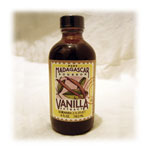
Fig. 6.12 Mix vanilla in your door-frame paint.
 |
"Good smells and good music" help create a welcoming atmosphere, continued Olson. "Nothing kills the buying mood more than a dead silent store." Playing great-quality kid albums, such as those by Putumayo, can also keep staff members cheerful.
In addition, Olson suggested mixing a few drops of vanilla into paint that's being put on the entrance doorframe (Fig. 6.12).
"They get hit with that smell and it makes them feel at home," he said. "Smell is one of the most powerful [senses]. When they smell vanilla again, what are they thinking of? You. Smell is the most powerful memory organ we have."
Scents are also a great way to camouflage unpleasant odors that might arise during the course of a busy day. While scented candles would be dangerous and out of place in a toy store, you might find other ways of allowing customers to quickly erase bad smells that come their way, such as attaching to the sides of shelves the press-and-spray deodorizers you can find in your local grocery story. Or, adapt the scent techniques of some gyms, which pump perfume through their ventilating systems.
Get Them Talking
"People love to talk about their children, so ask them questions about the child's interests," suggested Kelley Robertson, author of "Stop, Ask & Listen: Proven Sales Techniques to Turn Browsers Into Buyers." "If possible, engage the child in the conversation, too," he added.
Don't wait for the customer to make the first move, he warned.
"Most retailers wait for customers to approach them and ask a question and do not actively involve people in a conversation," continued Robertson. "Ask them questions such as, 'What brought you into the store today?'; 'What can I help you find?'; 'Who is the toy/activity for?'; 'What other toys does Susie enjoy playing with?'"
Also don’t assume that because you caught the customer looking at product X, that’s why they came in the store. “We ask them who they are buying for, how old, if they are a boy or girl, and what their interests are. We ask what price point they are looking for,” Candace Williams, owner of The Toy Maven in Dallas, Texas, told TDmonthly.
Striking a conversation can also help you gauge just how ready a customer is to buy. Buyers give off signals, and being attentive to what state he or she is in can help you guide the prospect toward a sale. (Sidebar 6.4: Reading Buying SIgnals)
Sidebar 6.4 Reading Buying Signals
According to Charles Allen of the C. W. Allen Group, buyers give off distinct "traffic" signals that can alert you to their readiness to buy.
Here's what Charles says about clients' traffic signals:
GREEN. If a customer leans toward you and makes strong eye contact, that is a probable green signal. Nodding the head or carefully reading packaging might also be examples. Another example is when prospects ask “how to” questions. If you receive a green signal, a long sales pitch is unnecessary and may very well persuade the prospect to change his or her first generous impulse and cancel the sale.
YELLOW (“I’m on the fence”) signals are the easiest to detect. You must put yourself in the prospect’s shoes and slowly educate the prospect as to what truly makes your offering unique, significant and valuable from his or her standpoint. Signs that the prospect is in a "yellow" mode include terse questions and massaging the chin. Discover your prospect’s needs and objectives by asking strategic probing questions.Narrow your questions (talking 20 percent of the time and listening 80 percent of the time) to obtain increasingly specific information.Allow the prospect to feel in control of the buying cycle at all times.
RED. An uninvolved tone of voice almost always gives the red signal, as do folded arms or crossed legs. A serious expression followed by a few meaningful responses to your questions indicates a probable decision not to buy.
A huge mistake is attempting to close too early before adequate value is established in the prospect’s mind. People hate to make BIG decisions. If the offering is right for them, your role is not that of the seller. Rather, it is that of the assistant buyer — to ensure that you tailor your solution for the customer in the optimal manner, given his or her unique needs/objectives.
Make Them Feel Special
Customers should feel important and special, said Robertson, but being "special" doesn't mean they're entitled to discounts.
"It means paying close attention to them, helping them with their purchase, listening to what they tell you, and recommending other items," he said. "Most specialty retailers miss tremendous opportunities to increase their sales by neglecting to suggest additional items. Done properly, this enhances the shopping experience and encourages people to return to your store."
The need to feel "special" may also lead to higher ticket purchases. Dr. Jensen noted, "There's a body of research on people's perceptions of quality being lower for items priced lower. Recent research even found that people, [when] told a wine had a high price tag, found it to taste significantly better than people tasting the same wine with a lower price tag."
Keep Smiling
Whatever else might be going on, you and your employees need to smile when people walk in the door. Smiling and frowning are both contagious. Which do you want to spread?
Let Them Play
“We just let people come in and play. The store is very kid friendly so it's like ladies’ day in here a lot of times. We just visit while the kids play,” said Anna Barr, owner of Anna’s Toy Depot in Austin, Texas.
Train Your Staff
Finally, said Robertson, make sure your staff understands and executes all the strategies that can bring your store success.
"Great employees make a difference," he said. "An indifferent employee can make a difference, too ... but for the wrong reasons. Invest the time to hire people with a customer-service focus." (See Chapter 4: Find Your Soul Employees
BE A DESTINATION
Becoming "the place to be" takes more than cool products and good customer service. It's about building a demand for the distinctive brand of your store.
Become the "Third Place"
Tim Peiffer, owner of Games & Gizmos in Redmond, Wash., noted that people who live up to three hours away come to his store regularly, even though there are 14 game stores in the area, because the center is a "third place" behind home and work. It's "a place like Cheers, Starbucks, a bowling alley" where people want to hang out.
In her two years as a toy-store owner, Molly McMullin, owner of Twirl Toystore and Playsapce in Taos, N.M., has learned that she doesn’t necessarily need to do a hard sell to get a loyal and profitable customer base.
“We wanted to be a magical and accessible place that all the children of Taos and their families could enjoy,” she told TDmonthly about her store, which includes an outdoor playground open to all.
“Encouraging footfall through events and activities to highlight the experiential side of our brand rather than more conventional product advertising has been the cornerstone of our marketing efforts. We always have something going on to plant that seed in our consumers’ minds. Families appreciate what we do, and pay us back by coming into the store and becoming a customer.”
Schedule for Customers
Games & Gizmos opens later in the day and closes at midnight to accommodate the board game, role-play and War Hammer nights and special events that draw from eight to nearly 80 customers. The majority, Peiffer said, will purchase on the spot or return to buy later. The Treasured Child in La Grange, Ky., allows customers to make appointments to shop in the evenings, when they can have the entire store to themselves.
Grab Attention
"People are pretty overwhelmed" by The Golden Apple's 40,000- to 50,000-SKU inventory, and "that's what they remember," said Owner Jon MacDougall of the Pleasanton, Calif., store. Terry Myers of Kaleidoscope Toys in Round Rock, Texas, created a "wow" wall behind the cash register, including a mural of blackboards suited for use with neon pens, interchangeable framed items, customer photos and a place for the store's motto and history.
Be Consistent
Though the Victorian-themed Treasured Child transitioned to a point-of-sale system after 10 years of handwriting receipts, it chose a simple checkout screen because it better matches the store's 19th century décor, Owner Donna Schwedler told TDmonthly.
Create Chatter
Word-of-mouth is the best form of marketing, advised retailing expert Jon Schallert, but it's slow. Publicizing a rags-to-riches story can speed it up, he advised, so post your store's history in the store and on the website, and include it in a press release to local or regional news outlets.
Give Happy Customers Company
Placing testimonials (with customers' permission) on your store website and on other marketing materials is a good idea, Schallert told TDmonthly, as is creating a referral program.
Make Marketing Count
The Doll Hospital and Toy Soldier Shop in Berkley, Mich., sends targeted mailers to customers on its 35,000-strong mailing list based on their interests and purchasing patterns, CEO Jack Zagrodzki told TDmonthly.
Reach Beyond Borders
| "Many toy stores around North America are still pulling customers from well beyond a 5-mile radius, but that is because they are more destination-focused, and consumers know that those businesses are the only place where they can get what they want." — Jon Schallert, Destination Business |
"Most businesses draw the majority of their customers from a five-mile radius," Schallert told TDmonthly. "If you are not able to draw customers from beyond that, you have a business differentiation problem, which takes more than a simple solution to correct. Many toy stores around North America are still pulling customers from well beyond a five-mile radius, but that is because they are more destination-focused, and consumers know that those businesses are the only places where they can get what they want."
If your store's en-route to other destinations, make sure tourists can see and remember you: PlayFair Toys in Boulder, Colo., attracts travelers from Denver and Steamboat, and The Treasured Child in La Grange, Ky., is a favored stop for Michigan families.
Reach Out to Neighbors
"Once a retailer has changed his business, he will go next door and teach a neighbor," Schallert told TDmonthly. "Start talking to other owners who might relocate their stores to your area. Start meeting regularly and begin sharing mailing lists, and creating some cooperative marketing where everyone splits the cost. Don't design your new marketing materials yourself; bring in an outside marketing expert to create the message, and then get every business in the area to promote it. That's exactly the way a marketplace develops!
"When you get multiple owners in the same marketplace to reposition themselves to consumers, you've created enough of a critical mass of retailers to pull people from the marketplace's borders."
By banding with your neighboring stores, giving customers the prices and experiences they want, as well as educating them to appreciate the distinctive toys and games you sell, you'll develop a larger and more loyal customer base that can support your store through good times and bad.



 Darkness Falls on Sevinpold by SEVINPOLD CASTLES INC.
 Khet: The Laser Game by INNOVENTION TOYS
 Piratack™ - The Board Game by GIDDY GOOSE 'N GANDER GAMES LLC
 Apples to Apples by OUT OF THE BOX PUBLISHING
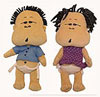 Ishababies® Marigold Boy and Girl by AISHA & CO. LLC
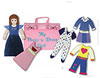 Giftique Starter Set by POCKETS OF LEARNING
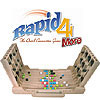 Rapid 4® More by UNCLE SKUNKLE TOYS, INC.
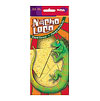 Nacho Loco by BUFFALO GAMES INC.
 The Farming Game® by THE WEEKEND FARMER CO.
 Webkinz Cocker Spaniel by GANZ
 Kookeys — T Rex by 10VOX ENTERTAINMENT INC.
 The T-Shirt Game by BUFFALO GAMES INC.
 Writer's Bio: ALISON MAREK is an award-winning writer, director and cartoonist whose work has been published by Fairchild Publications and DC Comics (Piranha Press), broadcast on Showtime and other cable networks, and viewed worldwide in film festivals. See her short films and print work on www.alisonmarek.com. Watch her nefarious villains in the web series www.MuggsMovers.com. Get inspired by her cartoons "Daily ARFFirmations to Unleash Your Inner Fido" at www.ARFFirmations.com. Phew! And then ...


