Cover your face, say "Where did I go?", and pop back out with "Peekaboo!" Few games get a bigger laugh from a baby. Behind the giggles, your baby is working on one of the big ideas of the first year: things and people keep existing even when they are out of sight. Child-development researchers call this object permanence. Here is what it means in plain English, what the CDC, the American Academy of Pediatrics and research say about when it shows up, free games you can play today, and five simple toys for babies 6 to 12 months old that let them practise it.
How we picked: every pick below has an age grade on its Amazon listing that includes babies under 1, was in stock when we checked on Oct. 27, 2026 and again on Nov. 1, 2026, needs no batteries and shows no small-parts warning on the listing. These are research-based picks, not hands-on tests, and no brand paid to be included.
What is object permanence?
Object permanence is knowing that a toy under a blanket is still there, even though you cannot see it. Adults take it for granted. Babies figure it out step by step. HealthyChildren.org, the American Academy of Pediatrics' (AAP) site for parents, explains that a baby's everyday observations in the months from 8 to 12 help them understand that objects exist even when out of sight.
The AAP describes what that looks like at home. At about 8 months, if you hide a toy under a scarf, your baby will lift the scarf and search for the toy underneath, something they would not have done three months earlier. By about 10 months, babies are so sure the toy still exists that they keep looking for it even after you have secretly removed it.
Research suggests the idea starts forming even earlier, before babies can search with their hands. A classic 1985 study in the journal Cognition by Renée Baillargeon, Elizabeth Spelke and Stanley Wasserman was titled, simply, "Object permanence in five-month-old infants." So the "aha" is less a single moment than a skill that keeps growing through the first year.
What the CDC milestones say
The CDC's "Learn the Signs. Act Early." checklists list things most babies (75% or more) can do by a certain age. Several of them are about hiding and finding:
- By 9 months, most babies look for objects when they are dropped out of sight, like a spoon or a toy, and smile or laugh when you play peek-a-boo.
- By 1 year, most babies look for things they see you hide, like a toy under a blanket, and put something in a container, like a block in a cup.
These are typical ranges, not deadlines, and every baby moves at their own pace.
Why hide-and-seek is harder than it looks
Finding a hidden toy takes memory as well as understanding. In a well-known test first designed by the psychologist Jean Piaget, an adult hides a toy in spot A a few times, then hides it in spot B while the baby watches. Many babies still reach for spot A. Developmental neuroscientist Adele Diamond tested 25 babies every two weeks until they turned 12 months. The wait the babies could handle before making that mistake grew steadily, from under 2 seconds at about 7½ months to more than 10 seconds by 12 months, and it varied a lot from baby to baby (Child Development, 1985). In other words, if your baby reaches for the old hiding spot, that is a normal part of the process.
Free games to play today
You do not need to buy anything to practise object permanence. The CDC and AAP suggest games like these:
- Classic peekaboo. The CDC suggests covering your head with a cloth and seeing if your baby pulls it off. The AAP adds variations: drape a soft cloth over your baby's head and ask "Where's the baby?", or hide behind a door with a foot or arm left in view as a clue.
- Toy under a blanket. The CDC suggests a game where your baby looks for things they see you hide, such as a toy under a blanket. Start with the toy half-covered, then fully covered.
- Drop and return. When your baby drops things, the CDC suggests making it a game: hand the item back so they can drop it again.
- Dump and fill. Dump blocks from a container and put them back together, another CDC tip for this age. An oatmeal box or a plastic tub works fine.
- Cheerful goodbyes. The CDC suggests a quick, cheerful goodbye instead of sneaking away, so your baby knows you are leaving, and letting them know when you are back.
The AAP says the best toys are the ones that get caregivers and children playing together. A cup, a cloth and your own face are the original object-permanence toys. The CDC also says screen time is not recommended for children younger than 2, other than video calls with loved ones.
Five toys that help babies practise hiding and finding
Grouped from youngest to oldest by the age grade on the Amazon listing. Prices were rechecked on Amazon on Nov. 1, 2026, at about 11:25 PM PT.
1. Lamaze Peek-A-Boo Forest Soft Baby Book (listing age 6 months and up)
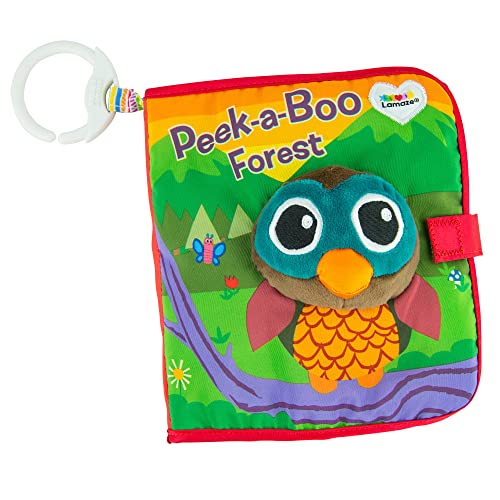
A washable cloth book with crinkly flaps that hide forest friends, plus rhymes on each page and a clip for the stroller or diaper bag. Lifting a flap to find who is underneath is peekaboo in book form.
Age and safety: listing says for babies 6 months and up. No small-parts warning shown on the listing. No batteries.
Price: $14.99 on Amazon (Amazon price checked Nov. 1, 2026)
Pros:
- Soft flaps are easy for small hands to grab and lift
- Washable, and the clip makes it a good on-the-go toy
Cons:
- A cloth book, so older babies who want to turn real pages may move on quickly
2. Moonkie Silicone Stacking Cups, 7 cups (listing age 6 months and up)

Seven soft, numbered silicone cups with raised patterns. Beyond stacking and nesting, an upside-down cup is the perfect hiding spot: tuck a small, baby-safe toy underneath and let your baby lift the cup to find it.
Age and safety: listing age 6 months and up. No small-parts warning shown on the listing. No batteries. Any toy you hide under a cup should also be larger than your baby's mouth.
Price: $13.99 on Amazon (Amazon price checked Nov. 1, 2026)
Pros:
- Hide-and-find, stacking and nesting in one set
- Soft silicone that the maker says is safe to chew, and holes for bath play
Cons:
- Soft cups make wobbly towers, so they stack less neatly than rigid plastic cups
3. Adena Montessori Object Permanence Box with Tray and Three Balls (listing age 6 months to 6 years)

The classic Montessori-style object permanence box: your baby drops a ball through the hole on top, it disappears for a moment, then rolls out onto the tray. It comes with three balls in different materials (wood, plastic and soft foam), each about 1.77 inches across, according to the listing.
Age and safety: listing age 6 months to 6 years. No small-parts warning shown on the listing. No batteries. Supervise play and check the balls for wear.
Price: $14.79 on Amazon (Amazon price checked Nov. 1, 2026)
Pros:
- Built around exactly this skill: now you see it, now you don't, and here it is again
- Three ball textures add something new to feel
Cons:
- Younger babies may need help to line the ball up with the hole at first
4. Peek-a Who? by Nina Laden, board book (reading age baby to 2 years)
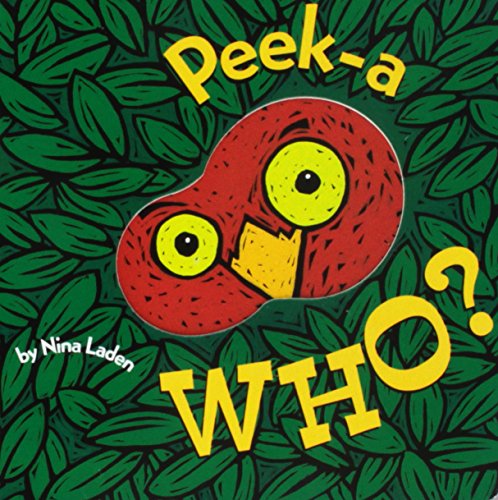
A sturdy little board book from Chronicle Books with cut-out windows: your baby peeks through the hole, guesses, then turns the page to see who was hiding. The CDC notes that babies around 1 year like books with things they can feel or flaps they can lift, and that "reading" can simply mean talking about the pictures.
Age and safety: the listing gives a reading age of baby to 2 years (listed as "from customers"). No small-parts warning shown. No batteries.
Price: $4.06 on Amazon (board book, list price $6.95; Amazon price checked Nov. 1, 2026)
Pros:
- Peekaboo built into every page turn
- Board pages stand up to chewing and grabbing
- The cheapest pick here
Cons:
- Short, at 10 pages, so you will read it many times in a row
5. Melissa & Doug K's Kids Take-Along Shape Sorter (listing age 9 months to 3 years)

A padded fabric bag with nine soft, textured blocks. Lift the crinkly flaps to find hidden pictures, then push blocks through the matching holes and unzip the bag to find them again. It matches the CDC's "put something in a container" milestone around the first birthday.
Age and safety: listing age 9 months to 3 years. No small-parts warning shown on the listing. No batteries. The listing carries a California Proposition 65 notice.
Price: $18.49 on Amazon (Amazon price checked Nov. 1, 2026)
Pros:
- Hiding, finding and early shape sorting in one quiet, soft toy
- The bag doubles as storage for travel
Cons:
- Fabric blocks are easy to lose without the bag
- The shape-matching part may not click until closer to 1 year
Keep playing as they grow
Once your baby is stacking as well as hiding, read our explainer What Toddlers Learn From Stacking and Building Toys (and 5 Picks to Try). For the next stages, see Best Toys for 18-Month-Olds 2026 and Best Toys for 2-Year-Olds 2026, and browse our Holiday Gift Guide for Ages 0 to 2.
A note on safety and development
Read the label: the AAP advises making sure all toys and parts are larger than your child's mouth to prevent choking. Keep toys rated 3+ (and their small pieces) away from babies, and supervise play. Milestones are a guide, not a test. If you have questions about how your baby is playing, searching for hidden things or reaching any milestone, talk to your pediatrician. The CDC also lists each state's early intervention contacts at cdc.gov/FindEI.
For the full weekly market brief: The ToyDirectory Intelligence Report
Sources:
#ad As an Amazon Associate, TDmonthly earns from qualifying purchases. Prices and availability are as of Nov. 1, 2026 and may change.